
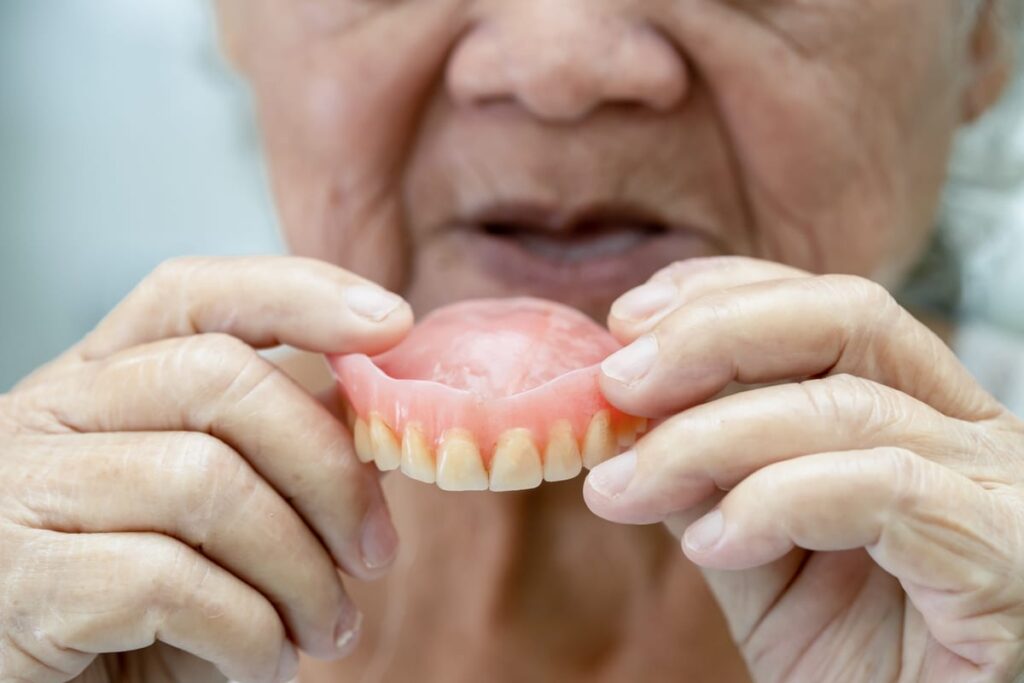
If you’ve lost one or more teeth, you’re likely weighing your options carefully. The question of dentures vs. implants — which actually preserves your jawbone in Newport Beach — comes up constantly in our practice. Both solutions replace missing teeth. But they behave very differently inside your mouth over time. Understanding those differences helps you make a truly informed choice.
Why Jawbone Preservation Matters After Tooth Loss
Most patients don’t realize that tooth roots do more than anchor your teeth. They continuously stimulate the jawbone beneath them. Every time you chew, that pressure travels through the root and signals the bone to stay strong and dense.
When a tooth is lost, that stimulation disappears. The bone in that area begins to shrink — a process called resorption. Within the first year alone, you can lose up to 25% of bone width at the extraction site.
Over several years, this bone loss changes your facial structure. Your cheeks may appear sunken. Your jaw may shift. This is not just cosmetic — it affects your ability to chew and speak comfortably.
Choosing the right tooth replacement directly impacts how much bone you preserve. That’s why this comparison matters so much for Newport Beach patients thinking long-term.
How Dentures Affect Your Jawbone Over Time
Traditional dentures sit on top of your gum tissue. They don’t connect to your jawbone at all. Because of this, they provide no stimulation to the underlying bone.
Bone resorption continues beneath dentures, year after year. As the bone shrinks, the dentures gradually become loose and ill-fitting. Most patients need their dentures relined or replaced every five to seven years for this reason.
Here are some common challenges denture wearers face over time:
- Loose or shifting dentures that slip while eating or speaking
- Difficulty chewing harder foods like raw vegetables or meat
- Gum soreness caused by ill-fitting appliances
- Changes in facial shape due to ongoing bone loss
- Increased reliance on denture adhesives
Dentures are a practical and affordable solution for many patients. But it’s important to understand that they do not stop bone loss — they simply replace the visible part of the tooth.
How Dental Implants Preserve Your Jawbone
Dental implants work differently from the very start. A titanium post is surgically placed directly into the jawbone. This post acts like a natural tooth root.
Over the following months, the bone actually fuses with the titanium through a process called osseointegration. The implant becomes a permanent part of your jaw. When you chew, the force transfers through the implant and into the bone — just like a real tooth.
This stimulation tells your body to keep producing bone cells in that area. As a result, implants actively prevent the bone loss that follows tooth extraction. Studies show that implants can preserve bone density for decades when properly maintained.
Here are the key advantages implants offer for long-term oral health:
- Stimulate jawbone to prevent resorption
- Maintain natural facial structure over time
- Function like natural teeth when biting and chewing
- Don’t require removal or adhesives
- Can last 20 years or more with proper care
For Newport Beach patients focused on long-term quality of life, implants offer a clear structural advantage over conventional dentures.
Comparing Cost, Function, and Quality of Life
Cost is often the first concern patients raise. Dentures have a lower upfront cost than implants. That’s a real and valid consideration for many families.
However, it helps to think about total cost over time. Dentures require ongoing maintenance, adhesives, relining, and eventual replacement. Implants have a higher initial investment but often cost less over a 10- to 20-year span.
Function is another major difference. Implant-supported teeth restore nearly full chewing power. Denture wearers typically regain only 20–30% of natural chewing ability. That affects nutrition, enjoyment of food, and daily comfort.
Social confidence also plays a role in quality of life. Many patients feel anxious about dentures slipping during conversations or meals. Implants eliminate that concern entirely. They feel and function like natural teeth.
If procedure anxiety is a concern for you, ask Dr. Ash Morgan about Sedation Dentistry Newport Beach options that can make the implant process far more comfortable.
Which Option Is Right for Newport Beach Patients?
Every patient’s situation is unique. Age, overall health, bone density, and personal goals all factor into the decision. Dr. Ash Morgan takes a thorough, individualized approach with every patient at Newport Beach Dental Solutions.
Some patients may not have sufficient bone density for implants right away. In those cases, bone grafting may be recommended before placement. Others may prefer dentures for financial or medical reasons — and that’s completely valid.
What matters most is making an informed decision based on complete information. Understanding how each option affects your jawbone, your face, and your daily life helps you choose confidently.
Patients exploring aesthetic solutions alongside tooth replacement may also want to learn about Cosmetic Dentistry Newport Beach services that complement implants and restore a full, natural-looking smile.
Conclusion: Make the Choice That Protects Your Future
When comparing dentures vs. implants, bone preservation is a critical factor that Newport Beach patients shouldn’t overlook. Dentures replace what’s visible. Implants replace the root — and that makes all the difference for long-term bone health, function, and confidence.
Dr. Ash Morgan and the team at Newport Beach Dental Solutions are here to guide you through every step of this decision. You deserve clear answers and a treatment plan built around your goals. Book Now to schedule your appointment with our team.
Frequently Asked Questions
Do dentures cause jawbone loss over time?
Yes. Dentures rest on top of the gum tissue and don’t connect to the jawbone. Without root stimulation, the bone gradually shrinks through a process called resorption. This can cause dentures to loosen and alter your facial shape over the years.
Are dental implants the only way to stop jawbone loss?
Dental implants are currently the most effective solution for preventing jawbone resorption after tooth loss. They mimic natural tooth roots and stimulate the bone through everyday chewing, preserving density long-term. Some implant-supported dentures also provide partial stimulation compared to conventional removable dentures.
How long do dental implants last compared to dentures?
With proper care, dental implants can last 20 years or more — often a lifetime. Traditional dentures typically need relining or replacement every five to seven years as the jawbone changes shape beneath them. Over a 20-year period, implants often represent a comparable or lower total investment.
Am I a good candidate for dental implants in Newport Beach?
Most healthy adults with adequate jawbone density are good candidates for implants. If bone loss has already occurred, a bone graft may be needed first. Dr. Ash Morgan will evaluate your bone density, gum health, and medical history to determine the best path forward for you.
Can I switch from dentures to dental implants later?
In many cases, yes — but the longer you wait, the more bone loss may have occurred. A bone graft is sometimes required before implant placement in former denture wearers. Scheduling a consultation early gives you more options and a better foundation for successful implant treatment.