
Sleep apnea is a problem that affects millions of people around the world, and many of these people may not be aware of the real consequences of sleep apnea on their oral health. A person with sleep apnea has irregular breathing during sleep, leading to brief pauses in breathing. This disrupts their sleep patterns and can lead to a range of issues in the body. However, the area that is usually ignored in this regard is how sleep apnea affects a person’s oral health.
The relationship between sleep apnea and oral health is complex. Sleep apnea may lead to several problems, including bruxism, periodontal disease, xerostomia, and TMJ. Knowledge of these interrelations is of utmost importance for achieving a healthy sleep pattern and oral health. The article explores how sleep apnea negatively affects a patient’s oral health. In addition, it underlines the necessity of an early treatment to avoid possible long-term oral problems that could be caused by the disease.
What Is Sleep Apnea, and How Does It Affect the Body?
Sleep apnea is characterized by frequent interruptions in breathing during sleep. These events can range from a few seconds to several minutes and can occur hundreds of times during a single night. This condition can lead to sleep disturbances, causing daytime fatigue, headaches, and a host of other health issues. The two most common forms of sleep apnea are obstructive sleep apnea (OSA) and central sleep apnea.
In OSA, the muscles at the back of the throat relax excessively during sleep, obstructing the airway. This, in turn, causes the body to partially wake up in order to continue breathing normally. This leads to a lack of oxygen in the blood, which in turn affects the body’s health.
Whereas the consequences of sleep apnea are usually widespread throughout the body, the mouth and teeth are especially susceptible. Airway obstructions can lead patients to suffer from a variety of conditions, ranging from teeth grinding to gum disease, without even being aware of the underlying cause. Understanding the impact on the mouth can help guide appropriate sleep apnea treatment in Newport Beach.
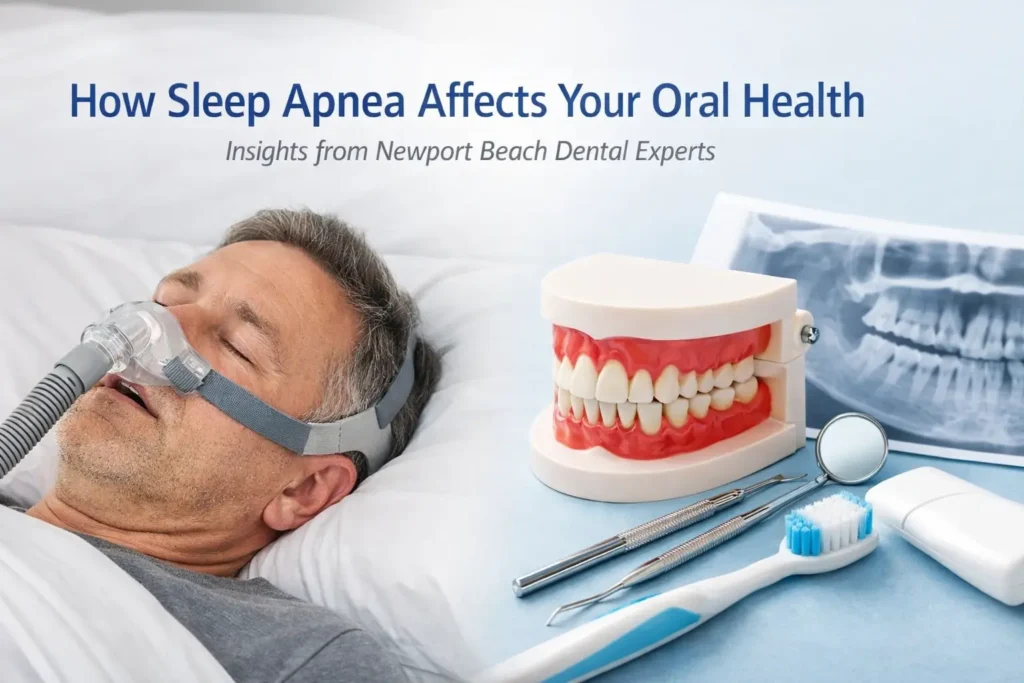
How Sleep Apnea Impacts Your Teeth and Gums
Sleep apnea can cause a range of problems in the mouth, each of which can lead to serious oral health issues. Here are some of the most common problems that can be caused by sleep apnea:
- Teeth Grinding (Bruxism): One of the most common problems caused by sleep apnea is teeth grinding, also known as bruxism. Sufferers of sleep apnea often grind their teeth at night in a bid to open their airway. This puts pressure on the teeth, which can cause them to wear down, chip, or even break.
- Dry Mouth: People with sleep apnea often breathe through their mouths at night, especially when their airway is obstructed. This can cause dry mouth, as the body produces less saliva. Saliva is very important because it helps neutralize mouth acid and prevent cavities and gum disease. When there is not enough saliva in your mouth, you are more likely to get cavities, gum disease, and other problems with your mouth.
- Gum Disease: When your body doesn’t get enough oxygen because of breathing problems at night, it can cause inflammation in your body, including your gums. This can lead to gum disease (gingivitis or periodontitis). Gum disease can cause pain and bleeding in your gums, and if left untreated, it can lead to tooth loss.
- Tooth Sensitivity: Due to grinding and clenching, tooth sensitivity may become more noticeable. The force applied to the teeth may cause the enamel to deteriorate, exposing the dentin. This may cause increased sensitivity to hot, cold, and sweet substances.
- Jaw Pain and TMD: Sleep apnea may also cause temporomandibular joint disorder (TMD), characterized by jaw and facial muscle pain. TMD may be caused by the increased stress of grinding and clenching the teeth.
- Morning Headaches: Sufferers of sleep apnea may also experience morning headaches, which may be due to tension from grinding teeth. Grinding teeth puts pressure on the jaw muscles, which can radiate throughout the head, causing headaches in the temples and sinuses.

Why It Is Important to Treat Sleep Apnea to Maintain Good Oral Health
It is important to treat sleep apnea as soon as possible to prevent any oral health problems. Sleep apnea can worsen existing dental problems like gum disease, cavities, and tooth damage if left untreated. However, the good news is that sleep apnea treatment can help improve your sleep quality and also help you maintain good oral health.
There are several ways to treat sleep apnea. CPAP machines are the most effective treatment for moderate to severe sleep apnea. On the other hand, oral appliances are used to treat mild sleep apnea. These appliances help keep the airway open while sleeping and also prevent teeth grinding, dry mouth, and any other oral health problems.
Professionals are best at providing personalized oral appliances to help patients deal with sleep apnea. The oral appliances are designed to fit comfortably in the mouth, keeping the airway open during sleep and thus preventing complications related to sleep apnea.
Treatment Options for Sleep Apnea: What You Need to Know
The treatment of sleep apnea depends on its severity. Below is an overview of the most common treatment options for sleep apnea:
- CPAP (Continuous Positive Airway Pressure): The most common treatment for moderate to severe obstructive sleep apnea. A CPAP machine uses a mask to blow a constant flow of air into the throat to keep it open. Although effective, CPAP may not be the best option for everyone.
- Oral Appliances: These are dental appliances commonly known as mandibular advancement devices (MADs). They work by advancing the lower jaw to keep the airway open. These devices are best suited for patients with mild to moderate sleep apnea who have difficulty using the CPAP machine.
- Lifestyle Modifications: In some cases, lifestyle changes such as weight loss, smoking cessation, and changes in sleeping position may help alleviate symptoms of sleep apnea. In some instances, lifestyle modifications may be used in conjunction with other treatments to ensure optimal results.
- Surgery: In some instances, surgery may be an option if other treatments have failed. Surgery may involve removing excess tissue in the throat or adjusting the jaw.

The Necessity of Visiting a Provider for Sleep Apnea Treatment
When it comes to sleep apnea treatment, visiting a professional is necessary. Failure to seek treatment may lead to poor oral health and serious health issues, including high blood pressure, heart disease, and stroke. Visiting a professional who can treat sleep apnea is necessary for your health and smile.
At Newport Beach Dental Solutions, we understand the complex relationship between sleep apnea and oral health. We can help you with a complete treatment plan to ensure your sleep apnea is under control and your oral health is protected.
Make Your Sleep and Oral Health a Priority Today
One of the most significant ways to protect your sleep and oral health is to treat your sleep apnea. If you believe you have sleep apnea or have already been diagnosed with the condition, it is essential to make treating it a priority. Not only will this help your sleep, but it will also protect your oral health from the negative effects of sleep apnea.
Do not put off treating your sleep apnea. At Newport Beach Dental Solutions, our professionals can provide you with effective sleep apnea treatment. Contact us today to schedule an appointment at your earliest convenience.
Questions People Ask About Sleep Apnea
Sleep apnea is a disorder where breathing repeatedly stops during sleep. It can lead to teeth grinding, dry mouth, gum disease, and jaw pain, all of which can affect oral health if left untreated.
Yes, sleep apnea can contribute to gum disease by causing inflammation and reducing oxygen levels, weakening the immune system, and promoting bacterial growth in the gums, leading to infection and other oral health problems.
Teeth grinding, or bruxism, is common in those with sleep apnea. The jaw clenches to open the airway during sleep, which can result in worn teeth, tooth sensitivity, and jaw pain over time.
CPAP machines, oral appliances, lifestyle changes, and in severe cases, surgery, are effective treatments for sleep apnea. These options help maintain airway openness, reduce symptoms, and protect oral health from damage caused by the disorder.
Using CPAP therapy, wearing oral appliances, and maintaining good oral hygiene can minimize the effects of sleep apnea, preventing issues like teeth grinding, dry mouth, and gum disease while improving overall sleep quality.
Yes, sleep apnea treatment, such as CPAP or oral devices, helps restore normal breathing during sleep, reducing disruptions. This leads to better sleep quality, improved daytime energy, and decreased risk of dental issues caused by interrupted sleep.